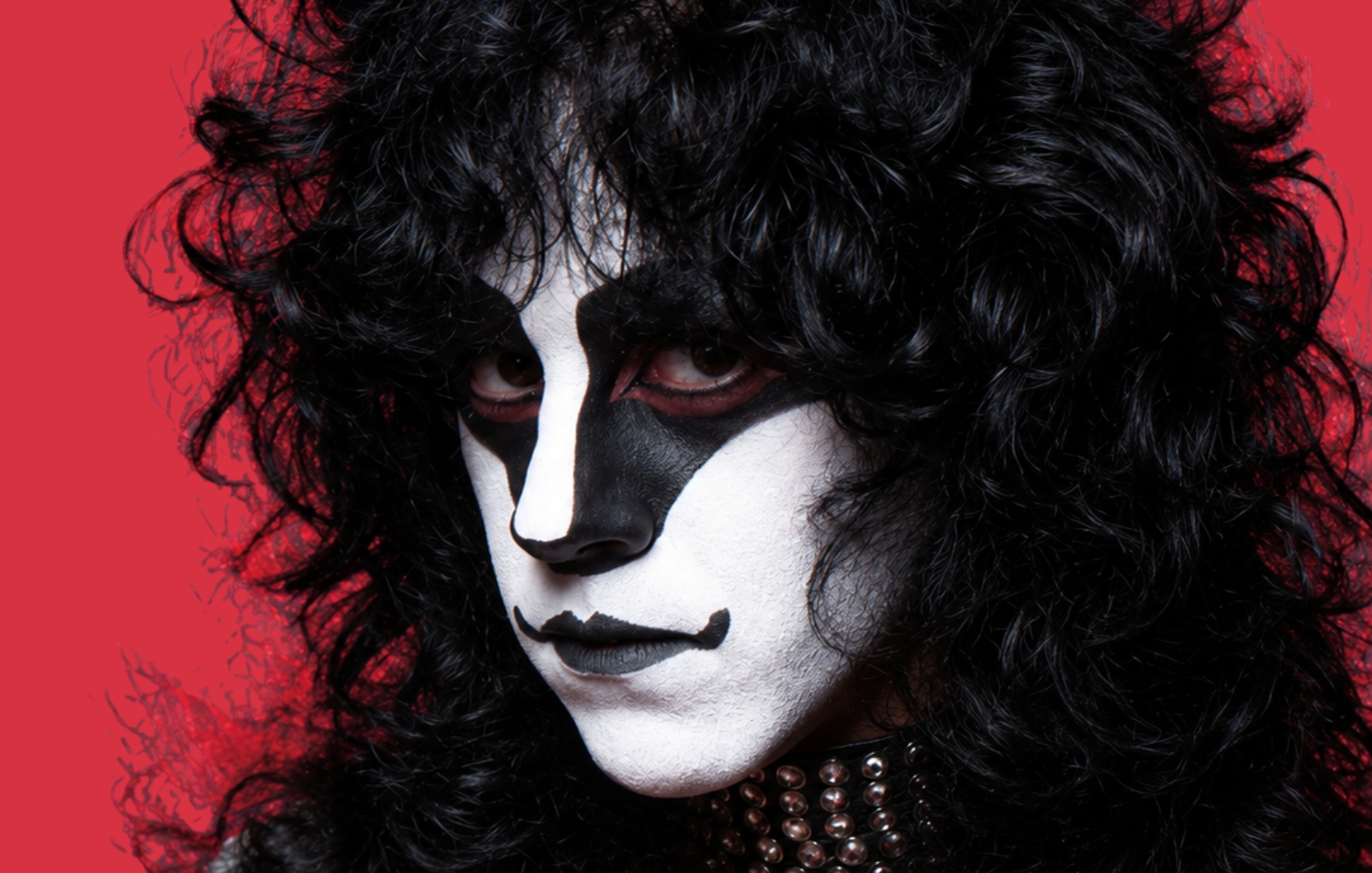
Few musicians have ever walked into a more difficult job than Eric Carr. When he joined KISS in 1980, he wasn’t simply replacing a drummer – he was replacing original member Peter Criss, whose Catman persona had become one of the band’s defining images. Rather than imitate his predecessor, Carr carved out an identity entirely his own. Behind the makeup of “The Fox,” he brought explosive energy, thunderous drumming, and an infectious enthusiasm that helped carry KISS through one of the most challenging – and ultimately resilient – eras of its career.
Eric Carr joined KISS during one of the band’s most uncertain chapters, but he helped guide them through the 1980s with unmatched energy and professionalism. Albums such as Creatures of the Night, Lick It Up, Animalize, Asylum, Crazy Nights, and Hot in the Shade all bear his unmistakable power behind the drums. Fans also remember his rare lead vocal performance on “Little Caesar,” proving he brought more to KISS than just percussion.
For more than a decade, Eric Carr wasn’t simply KISS’ drummer – he became the heartbeat of the band. Offstage, however, his final year would become the greatest battle of his life.
A Shocking Diagnosis
In early 1991, Eric Carr began feeling unusually fatigued. Initial medical tests suggested relatively minor health problems, but further examinations revealed something almost unheard of: a rare form of cancer that had developed in his heart. The diagnosis stunned everyone around him.
Carr underwent major surgery in April 1991 to remove tumors from his heart and lungs, followed by aggressive chemotherapy treatments. Despite the pain, he remained determined to return to the band as quickly as possible. Friends and family recalled that he rarely complained and remained focused on getting back behind his drum kit.
Although too sick to record drums for what would become Revenge, Carr desperately wanted to remain part of KISS. One of his final requests was to appear in the music video for “God Gave Rock ‘n Roll to You II.” By that point chemotherapy had caused him to lose his hair, forcing him to wear a wig during filming. Those on the set later recalled that he was in considerable pain throughout the shoot, but he insisted on finishing it because performing with KISS meant everything to him.
His final public appearance with KISS came on September 5, 1991, at the MTV Video Music Awards, where fans had little idea how seriously ill he had become.
The Final Days
In November 1991, Carr suffered a brain hemorrhage and never regained consciousness. He passed away on November 24, 1991, at the age of 41. In one of rock’s cruelest twists of fate, his death came on the very same day the world learned that Freddie Mercury had also died. News outlets around the world understandably focused on Mercury, and Carr’s passing quickly slipped into the background. For many KISS fans, it felt as though one of rock’s most beloved drummers never received the farewell he deserved.
A Loss That Stayed With KISS
Away from the cameras, Carr’s bandmates tried to bring moments of normalcy into an impossible situation.
Gene Simmons has often shared a story that perfectly captured Eric’s personality. During one hospital visit, Simmons snuck Eric a McDonald’s meal because it was one of his favorites. It wasn’t about the food – it was about giving his friend something familiar, something comforting, in the middle of a battle neither of them wanted to face. Simmons has always remembered Eric as someone whose enthusiasm and sense of humor survived even as his body grew weaker.
Paul Stanley has spoken even more candidly in recent years. Looking back on Eric’s illness, Stanley admitted that he wasn’t emotionally prepared to accept that someone so close to him was dying. Rather than knowing what to say or do, he found himself pulling away, something he has openly said he regrets.
“The idea that someone close to me had cancer and was going to die… I couldn’t take it in.”
It’s one of the most personal reflections Stanley has ever shared publicly, revealing that the pain of losing Eric never completely disappeared. Decades later, he still wishes he could have handled those final months differently.
While Gene remembered Eric’s optimism and Paul reflected on his regrets, Bruce Kulick became the keeper of his friend’s legacy.
Perhaps no one has kept Eric’s memory alive more consistently than Bruce. Having shared the stage with Carr throughout the band’s non-makeup era, Kulick has spoken lovingly about his friend for decades. Whether through interviews, convention appearances, social media tributes, or annual remembrances on the anniversary of Eric’s passing, Kulick has made sure newer generations understand who Eric Carr really was – not just an incredible drummer, but one of the kindest, funniest, and most genuine people he ever knew.
More Than “The Fox”
More than thirty years after his passing, Eric Carr’s legacy isn’t measured solely by platinum albums or sold-out arenas. It’s found in the respect of his peers, the love of his fans, and the stories that continue to be told about the man behind The Fox makeup. His career ended far too soon, but the impact he made continues to echo through every generation of KISS fans. Eric Carr didn’t just replace Peter Criss – he earned his own place in rock history.